February 3, 2024
1 book · 10 highlights · 7 notes
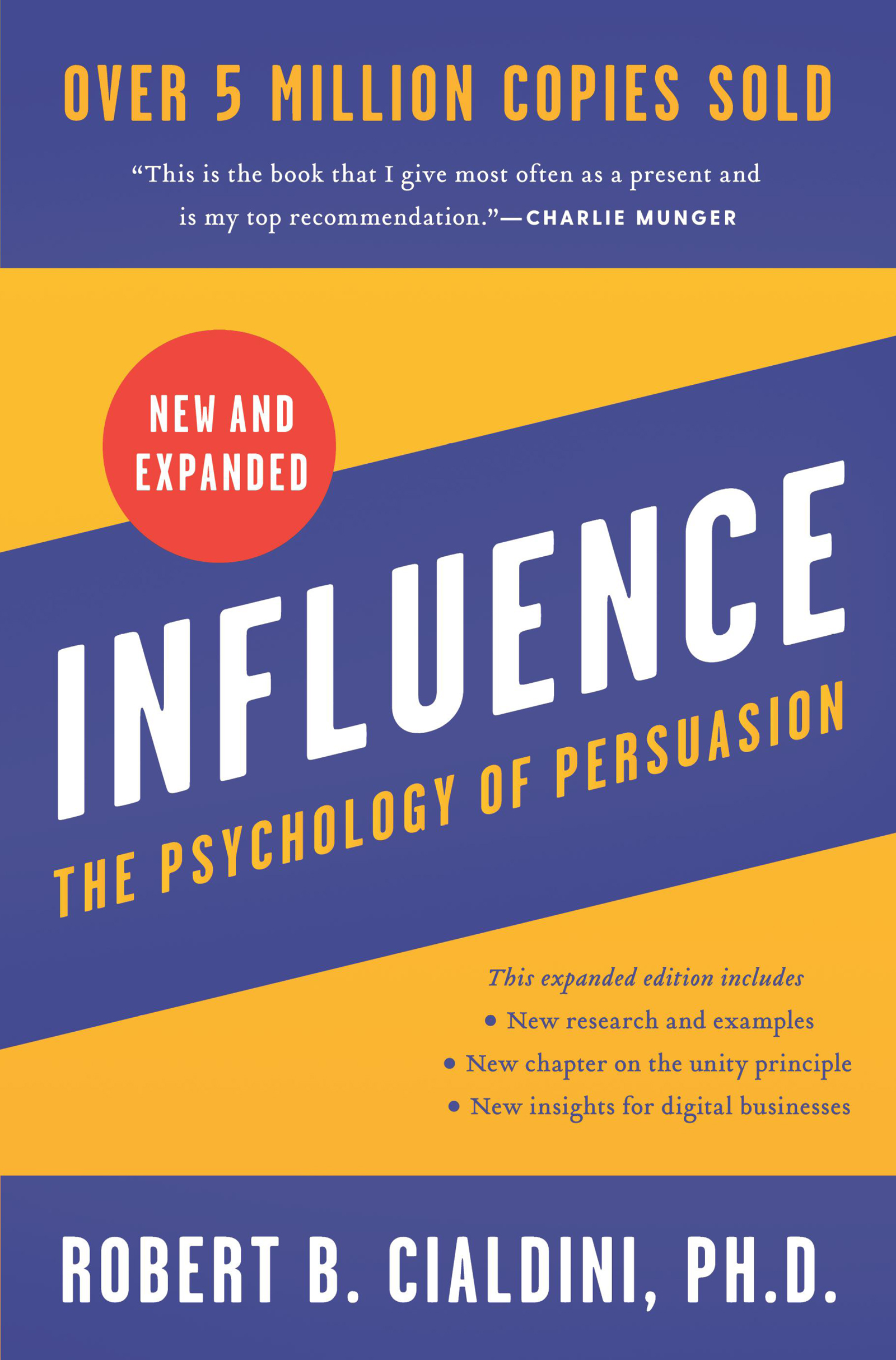
Influence
Robert B. Cialdini, PhD
“Clever use of perceptual contrast is by no means confined to clothiers. I came across a technique that engaged the contrast principle while I was investigating, undercover, the compliance tactics of real-estate companies. To learn the ropes, I accompanied a salesman on a weekend of showing houses to prospective home buyers. The salesman—we can call him Phil—was to give me tips to help me through my break-in period. One thing I quickly noticed was that whenever Phil began showing a new set of customers potential buys, he would start with a couple of undesirable houses. I asked him about it, and he laughed. They were what he called “setup” properties. The company maintained an unappealing house or two on its lists at inflated prices. These houses were not intended to be sold to customers but only to be shown to them so that the genuine properties in the company’s inventory would benefit from the comparison. Not all the sales staff made use of the setup houses, but Phil did. He said he liked to watch his prospects’ “eyes light up” when he showed the places he really wanted to sell them after they had seen the unattractive ones. “The house I got them spotted for looks really great after they’ve first looked at a couple of dumps.””
2:34 AM
卖房子的策略,先看一个性价比低的,再看一个高的
✎ NOTE
“Called fixed-action patterns, these mechanical sequences are noteworthy in their similarity to certain automatic (*click*, *run*) responses by humans”
2:41 AM
人是有某种固定的、机械式的反应的
✎ NOTE
“The chances of error increase even further when other individuals seek to profit by arranging (through manipulation of trigger features) to stimulate a desired behavior at inappropriate times.”
2:42 AM
这种捷径容易被人利用
✎ NOTE
“Perceptual contrast—the tendency to see two things that are different from one another as being more different than they actually are—is a lever of influence used by some compliance practitioners.”
2:43 AM
“Let not thine hand be stretched out to receive and drawn back when thou shouldest repay.”
2:45 AM
This sentence means that when someone does something nice for us, we should try to do something nice for them in return. It's important to remember this and not forget to repay their kindness.
✎ NOTE
“reciprocation”
2:47 AM
reciprocation (noun): the act of responding to an action with a corresponding action; mutual exchange. 🤝💬
✎ NOTE
“Remarkably, if the request was preceded by a gift of a small packet of sweets, contributions more than doubled.”
2:49 AM
互惠原则的应用
✎ NOTE
“By virtue of the reciprocity rule, then, we are *obligated* to the future repayment of favors, gifts, invitations, friendly actions, and the like.”
4:14 AM
“sumimasen”
4:47 AM
Sumimasen: Sumimasen is a Japanese word that is used to apologize, express gratitude, or seek attention politely. It is often translated as "excuse me" or "sorry" in English, but its literal meaning is "this will not end." The word reflects the Japanese culture's emphasis on humility and politeness, and it is used in a variety of situations, ranging from everyday interactions to formal business meetings.
✎ NOTE
“Termed *judgmental heuristics*, these shortcuts operate in much the same fashion as the expensive = good rule, allowing for simplified thinking that works well most of the time but leaves us open to occasional, costly mistakes”
5:45 AM